
“There was something about the Process that really allowed me to understand that there’s also a lot of healing that comes from pleasure and play and connection, and to really disentangle the parts of me that were so attached to being a sufferer, to being someone who struggled.” – Sara Bissell Rubin
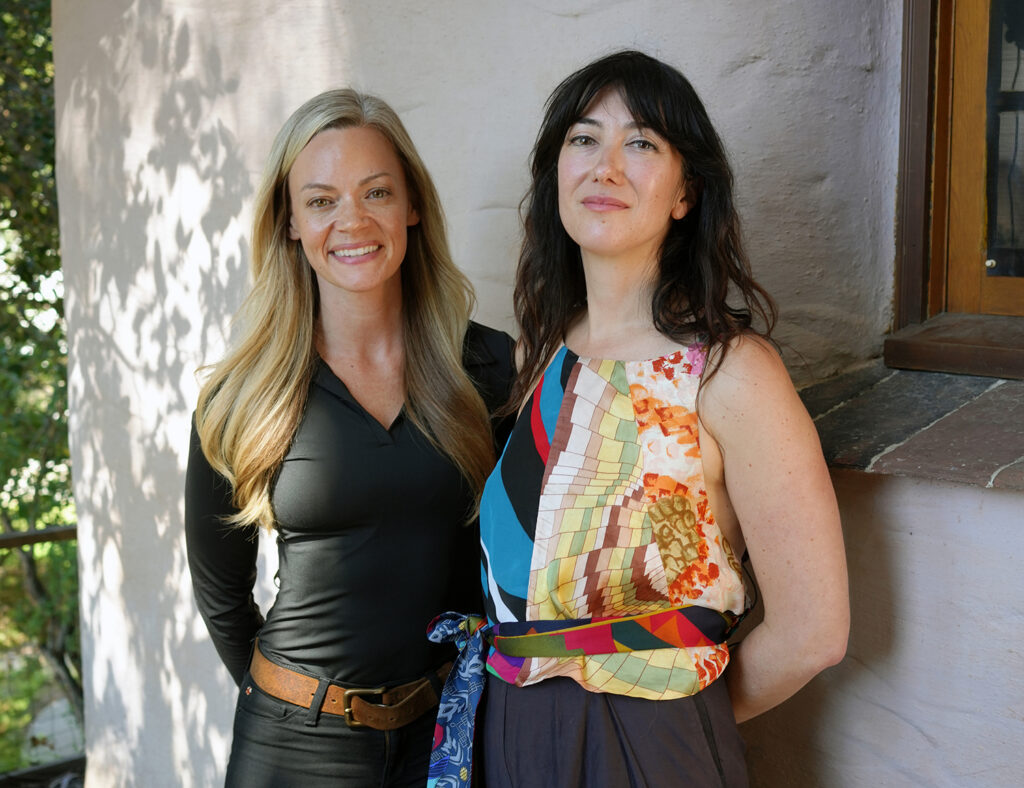
Medical Sociologist and Hoffman Process grad, Sara Bissell Rubin, holds a PhD in the neuroscience of pain and is a chronic pain educator. Sara joins Sadie to talk about the physical and emotional experience of pain, the science behind pain, and her experience in the Process as someone who lives with a chronic pain condition.
Special note: Sara’s video episode is one of the first recorded in our new Hoffman Podcast Studio at Santa Sabina, our new retreat site. So, welcome, Sara, and welcome all to our new podcast studio home.
This conversation is a warm doorway into a topic most of us would rather not discuss. With Sara’s wisdom and compassion, we can begin to change how we relate to our own pain. Sara shares that it can be hard to see our way out of pain when we’re in it. We learn to relate to pain in our childhood and take those patterns into adulthood. By disconnecting from these patterns through the Process, we can begin to relate to pain in a new way.
During her Process, Sara did exactly this. She saw that she tended to relate to pain through suffering and struggle. Through the Process, Sara found that play, pleasure, and connection are powerful allies in healing. Sara says she trusts in love and compassion and is reclaiming self-trust in relation to pain.
We hope you enjoy this healing conversation.
Podcast: Download (Duration: 31:08 — 28.5MB)
Subscribe: RSS
 Sara Bissell Rubin has spent a lot of her life thinking about pain. A medical sociologist and chronic pain educator, Sara received her PhD from UCSF. There, she studied how neuroscience makes sense of pain and how those understandings shape the way we think about and treat it. Before that, she was a clinical bodyworker providing hands-on care for people with severe chronic pain and PTSD.
During grad school, Sara developed her own chronic pain condition. This lent a layer of urgency and fervent curiosity to her research topic. She brings these three ways of knowing – academic, somatic, and lived experience – to her work as she guides individuals and groups towards finding their own resolution from chronic pain.
In part because of the nature of her work, which involves walking with people through the most difficult areas of their lives, Sara came to the Hoffman Process strongly identified with her dark side. She held a strong belief that life’s struggles were where the truth lay, and that embracing them was the only path to real healing. Sara also had a secret wish that the Process would finally fix her for good. Although she advocated in her research and her work for the human capacity for agency, she didn’t truly believe that change was possible because she hadn’t experienced any lasting change in herself. During her Process, Sara realized that the constant striving to be fixed was reinforcing the shame message that she was broken and in need of fixing in the first place, and that, for her, real growth comes from love, play, and connection.
Learn more about Sara at www.painfermata.com. Follow Sara on Instagram and Facebook.
Michael Klein, PhD, Therapist and teacher of Mindfulness and Self-Compassion
Sara’s teacher, Jason Beegle.
• Listen to Jason on The Hoffman Podcast: Our Pre-Process Panel – with Regina, Marc, and Jason