
“A lot of the women in my family were silenced. …I know in my heart that speaking my truth now…is to take those skeletons out of the closet and let them dance.” – Jennifer Johnson
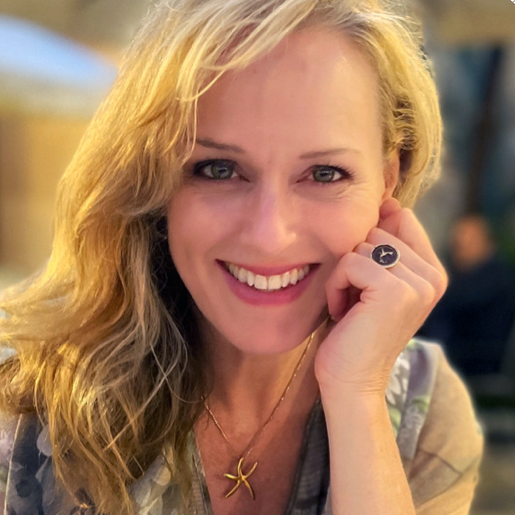
Writer, artist, seeker, and Hoffman Process grad, Jennifer Johnson grew up speaking the language of the arts. She sees the world with wonder, curiosity, and eternal optimism.
Before taking the Process, Jennifer wrote about her patterns, studying each like an archaeological dig. She worked hard to escape them, but couldn’t stop acting them out. Exasperated that they followed her everywhere, she realized awareness and understanding weren’t enough. She reached out to trusted people for help. One astute friend told her that, at that point in Jennifer’s healing, the one thing that would help was the Hoffman Process.
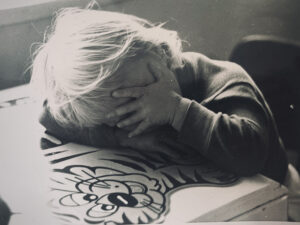
After completing Hoffman Essentials, Jennifer was excited to begin her Process in Canada. Diving deep into the Process‘s healing power, Jennifer was willing to feel the full range of her emotions. The Process pushed her into places she needed to go to access places she needed to heal. She navigated unknown territory, enabling deep healing of her family of origin.
Jennifer shares that ancestrally, many women in her family were silenced. She found that the antidote to this wound is to live as an empowered truth-sayer. Speaking her truth allows the family skeletons to dance. For Jennifer, this is healing the original ancestral and familial wounds.
Post-Process, Jennifer now sees how she tried to get to the roots of her family patterns through digging and analyzing. Instead, the Process guided her to see these roots from a place of Spirit, and to have compassion for where they originated. Healing brought compassion, empathy, and acceptance of where she came from and who she is.
Podcast: Download (Duration: 30:08 — 69.0MB)
Subscribe: RSS
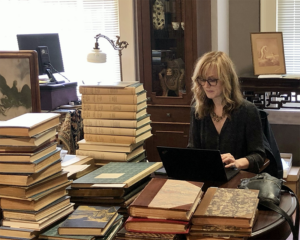
Jennifer K. Johnson believes transformation is less about becoming someone new than daring to be seen as who we always were. A writer, interdisciplinary artist, and seeker, Jennifer grew up speaking the language of the arts. A self-taught polymath, she tried on many roles: gallery director, art dealer, antiquarian cataloguer, coach, stylist, executive assistant, the dependable one, the pleaser. Each held a piece of a larger puzzle, until she realized she needed to represent the artist she most needed to represent: herself.

In 2018, she began to write, and her life began to change. On the page, she reclaimed what she had kept in the shadows: the parts of herself others had called too much. They never were. Fittingly, her work appears in the anthology Too Much Woman (Womancraft Publishing).
In January 2026, tired of repeating the same patterns in her relationships, she did the Hoffman Process. There she traced those patterns to their root: a silence passed down by the women of her maternal line. She chose to be the first to break it, on the page, in her forthcoming memoir, The Original Wound. Beneath the patterns, she found someone she had known all along: the five-year-old who made art, wrote songs and stories, played outdoors until dark, and believed in fairies and tree spirits.
Today she lives in Tsawwassen, British Columbia, “the land facing the sea.” Most days, she writes from dawn to noon, then walks the shoreline, communes with the eagles, and marvels at life’s absurdity. She shares what she’s learning in Light of Hand, a Substack about turning soul wounds into wisdom. At last, she is stepping into her own light.
Discover more about Jennifer at jenniferjohnsonart.ca. Follow Jennifer on Instagram.
Self-portrait at 25 years old, titled: Red-Headed Step Child
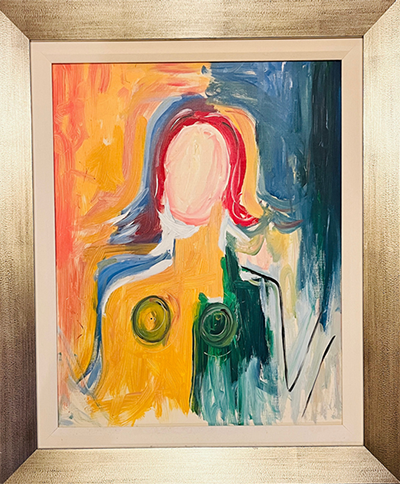
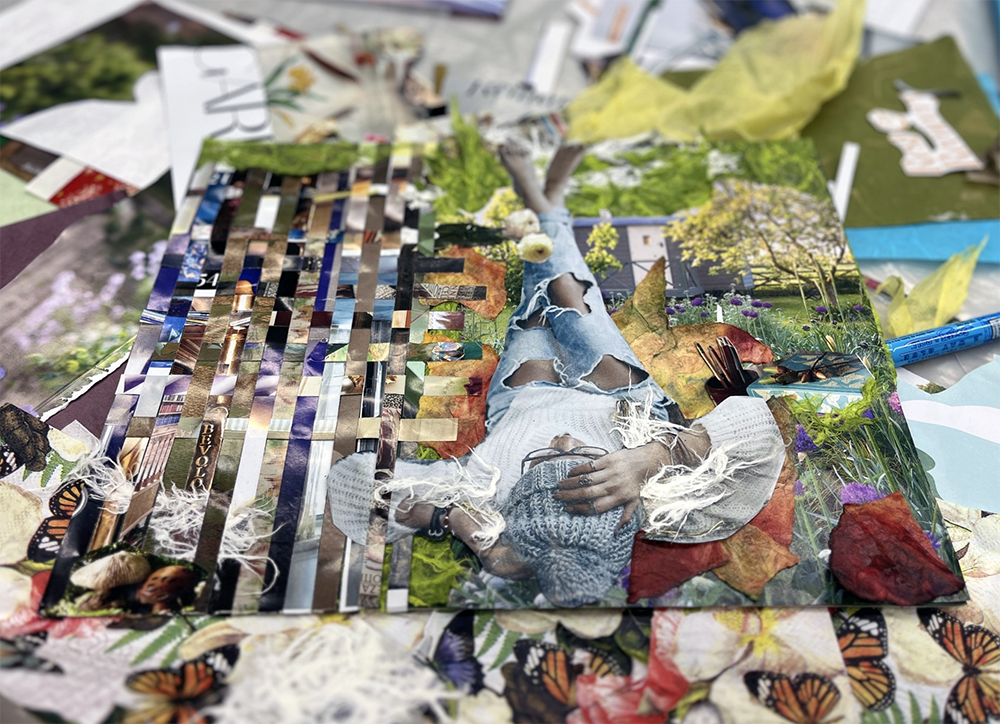
Collage for the essay “Tearing Apart the Silence”
Flight Test
Tearing Apart the Silence
Reflections on a River
Writing poems when pissed
Do-Have-Be vs. Be-Do-Have
Do-Have-Be, the conventional approach:
Most of us are taught to start with “Do.” We make choices and take action to have things so we ‘end up’ being happy. In this approach, we aren’t beginning with who we truly are. Instead, it immediately puts our happiness out there somewhere. Some day we will be something we long to be. But this doesn’t bring lasting happiness, nor does it bring us to who we are.
Be-Do-Have, the Hoffman way:
When we begin with “Be” (the embodied qualities of my Spiritual Self), we respond to life rather than react. Then our “Doing” allows us to make informed and aligned choices out of that response. Out of these choices, we “Have” whatever comes from our authentic, aligned presence and responsiveness. Starting from who you truly are holds creative and lasting power. We no longer look for our happiness at some future time.
The Cycle of Transformation:
 Awareness: Recognizing and identifying unconscious negative patterns, moods, attitudes, beliefs, or behaviors inherited or developed in childhood.
Expression: Safely and fully releasing the pent-up emotional charge, grief, anger, or pain tied to those old patterns rather than suppressing them.
Compassion and Forgiveness: Developing deep empathy and understanding for oneself and key figures (like parents or caregivers) to dissolve judgment, shame, and resentment.
New Ways of Being (New Behavior): Choosing and anchoring conscious, authentic responses aligned with your spiritual or true self rather than old survival.
Watch retired Hoffman teacher, Hilary Illick, explain the Cycle of Transformation:
Post-Process Weekend:
• Two days, post-Process, to integrate the work done during the Process.
• Listen to our post-Process Panel on the Hoffman Podcast: After the Process, With Kevin, Steve, and Zeina
Self-Forgiveness/Self-Love Walk is a grounding meditation practice to release old behavior patterns and reconnect with your authentic self.
The QuadCheck (Quadrinity Check-in):
• A Hoffman tool done daily to check in with all four parts of the Quadrinity: the intellect, the emotional self, the body, and the Spiritual Self.
• Join our virtual community Quad-Check at 8:00 am PT on Instagram. The Quad Check practice supports you in integrating and honoring your Quadrinity: Spiritual Self, Intellect, Emotional Self, and Body.
Joseph Campbell:
• Hero’s Journey
• Descent into the belly of the whale
Lori Raudnask: Operations Manager for Hoffman Institute, Canada
• Listen to Lori on the Hoffman Podcast: Doing Deep Work at Hoffman Canada
Hoffman Canada Retreat Site, Sanctum Retreat in Alberta –
“My momma always said, ‘Life was like a box of chocolates. You never know what you’re gonna get.” Forrest Gump, played by Tom Hanks
EMDR (Eye movement desensitization and reprocessing)
Hoffman grad groups